

The Raptors' Playoff Microcosm
The Raptors traded for Brandon Ingram to raise the ceiling. Has he?


The Raptors are one of the spunkier teams in the playoffs right now. Scottie Barnes put on an incredible defensive season this year, Jamal Shead is a DAWG in all-caps, and RJ Barrett has largely redeemed his reputation in the eyes of the average fan — all amazing outcomes. Even better, the team is staying competitive with the Cavaliers, who by all accounts should outgun, outman, and outdefend the Raps. And yet, they’re here!
There has been a problem that has come to light during this series, though. An acquisition that was seen as a bargain has turned into something of a logistical issue, a paradox that could become a set of very expensive handcuffs over the next season or two.
That problem, of course, is Brandon Ingram.
Note: This piece is shorter but more centralized around a core idea. Hopefully you enjoy it! (It also has some great graphics)

The original trade for Ingram was a reasonable one by most standards. In exchange for Bruce Brown Jr., Kelly Olynyk, and a 2026 top-four protected first-round pick (via Indiana), the Raptors got a player who has consistently been the #1 scorer (without Zion on the floor) for the Pelicans, and has one of the most beautiful mid-range games in the league.
That’s a very affordable package. The real cost came when the Raptors announced Ingram was getting a 3-year, $120 million extension, without having proven anything on the team as of yet. And, unfortunately for them, Ingram’s tendencies have really hurt the team’s overall win rate.
There are a couple of ways to slice this. The first is by looking at what happens when Ingram takes a lot of shots. Newsflash: It’s not great.
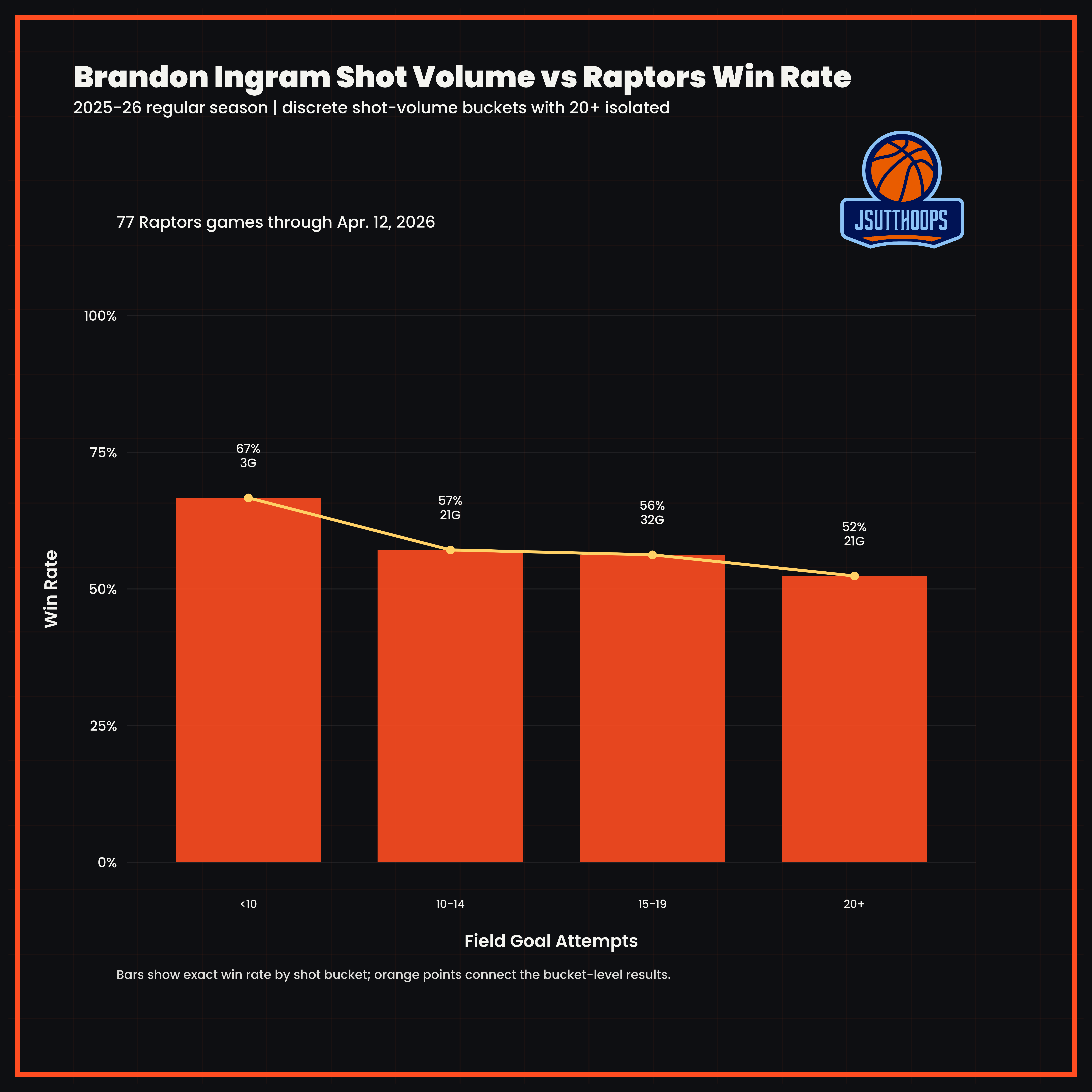
When Ingram takes more than 20 shots in a game — which he’s done in 21 games for the Raps — the team’s win rate goes from around 60% to 52%, a massive drop. Yes, it’s still a net-positive, but you can see the trendline. When Ingram takes fewer than 14 games, you’re looking at a 63%-ish win rate. Correlation is not causation, though, so let’s look at some more options.
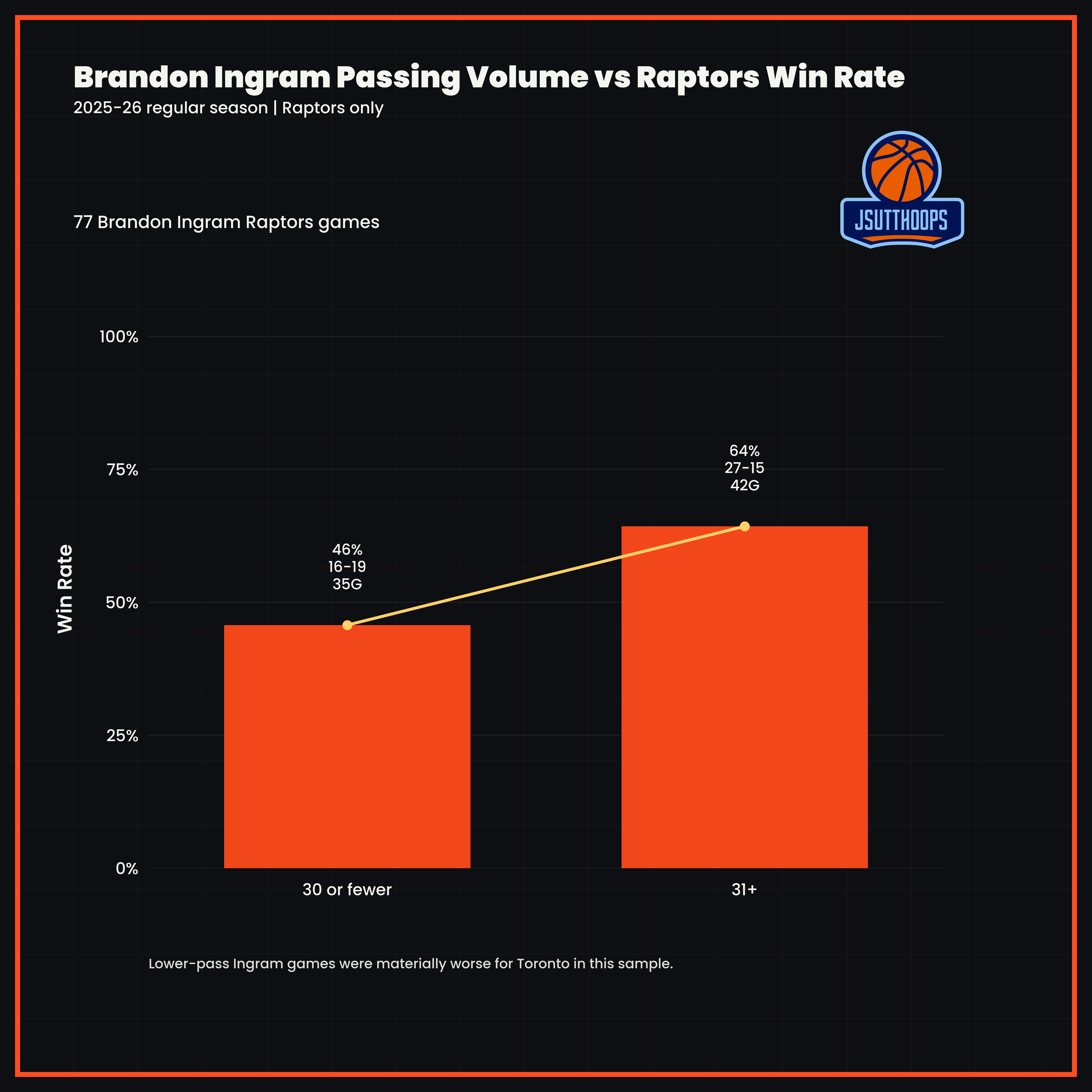
First, when Ingram passes the ball more than 30 times in a game, the team wins a lot more than when he passes less than 30 times. The team in Ingram iso-ball is way worse than the team in Ingram distribution-ball.
Not convinced yet? Well, what about secondary assists — not the assists that Ingram is getting, but the second pass that happens as a result of his pass. When Ingram becomes connective tissue, the team wins.
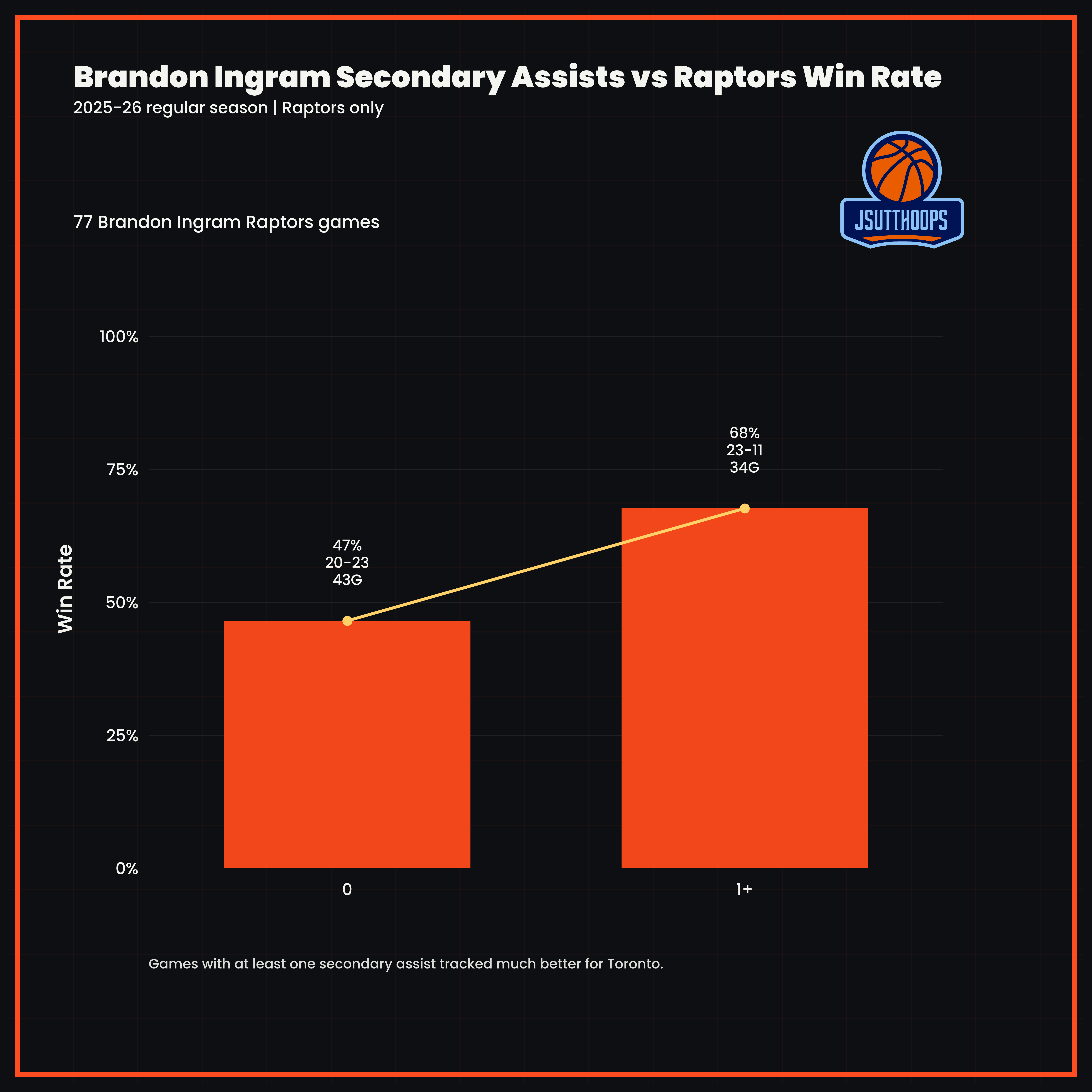
That’s a bit ironic, considering Ingram says that the Raptors can’t win games if he takes 9 shots.
