

Just How Broken is Officiating?
And, by extension, playoff officiating

Refs appear to be the topic of the year — or, if history is any indication, the season.
Everyone is complaining about refereeing and the overall state of the game for various reasons. Players are mad, coaches are calling out referees by name, and the overall fandom is somewhat askew right now.
All of the conversation — including my own, last week — got me thinking: Just how bad is the officiating situation right now?
It’s difficult to quantify that, but we do have one tool: The Last Two Minute report after each game, also known as the L2M. L2Ms allow the league to review calls after each game, and while there is no known punishment for getting a call wrong, it at least puts it on public record.
Now, I hear you saying: But couldn’t that be biased, since the NBA is essentially reviewing itself? It’s certainly possible — I won’t make any accusations for the sake of fairness — but it’s also the best proxy we have to measure what’s going on with refereeing right now.
By reviewing the data, you’ll find out that there’s certainly something wrong. It just might not be what you think.

In the NBA’s L2M calls, there are typically two categories of events:
IC: incorrect calls, where a whistle was blown, but the league later said it was wrong
INC: incorrect non-calls, where no whistle was blown, but the league later said there should have been one
Using this, along with some fun textual analysis things I won’t get into here, you can determine not only the rate at which calls are missed/incorrect, but also the specific teams that are involved in said calls.
In addition, we can then check when each L2M report was released, and for which games, and therefore see whether officiating has gotten worse over time. And, on the face of it — I hate to break it to you — wrong calls are not more frequent than they used to be:
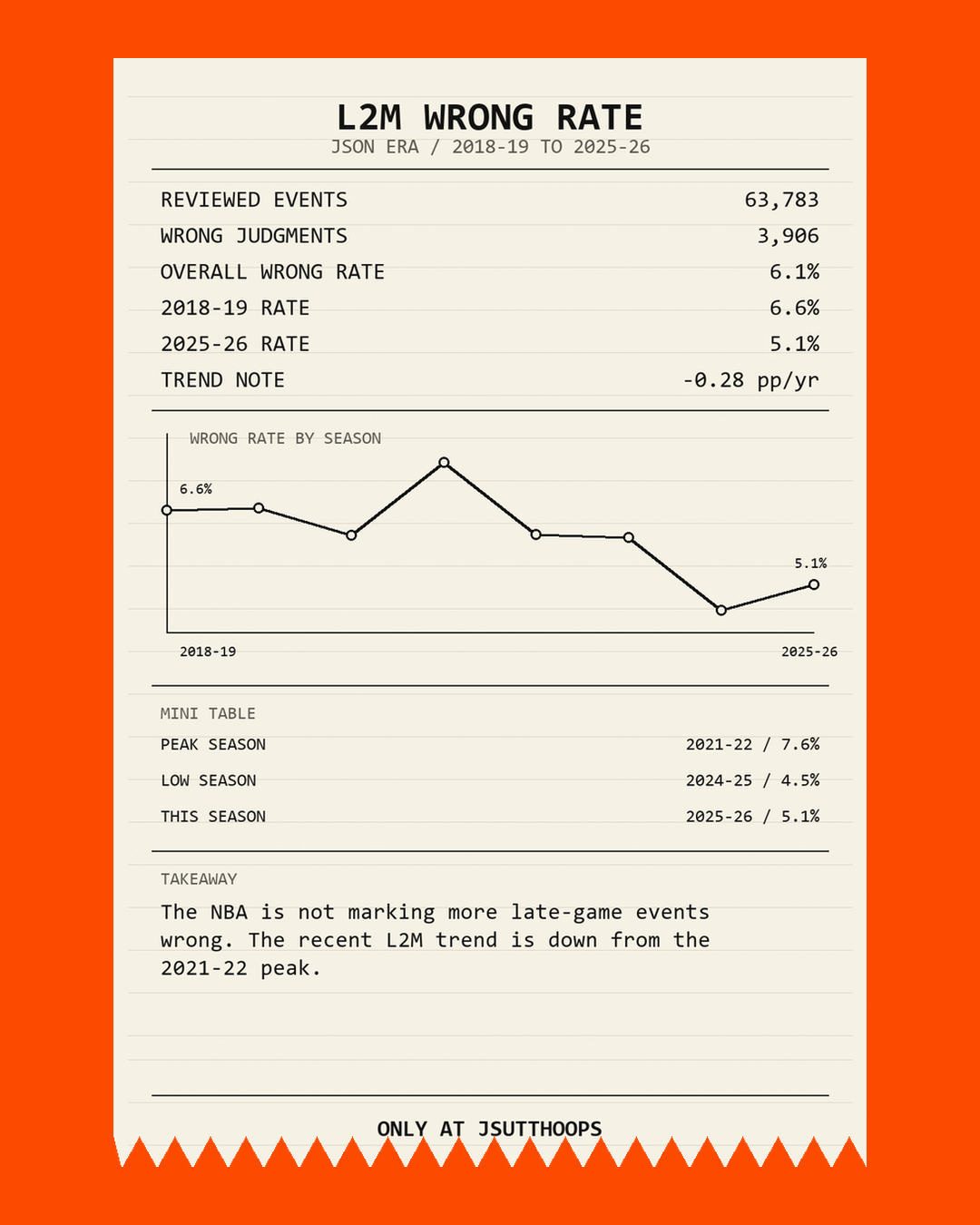
In fact, as you can see, the percentage of wrong calls (strictly in the last two minutes of a game, of course) has actually gone down. In 2021-22 about 7.6% of calls were wrong, which is sky-high if you think about it, and now we’re at around 5%, which is still not great but far more reasonable at a 1-in-20 chance.
But that’s not the end of the story, of course. There’s a bigger issue than just the officiating itself: The types of calls that are being missed, and who they benefit. For example, take a look at the below bar chart, which shows the percentage of L2M-reviewed calls that referees get wrong:
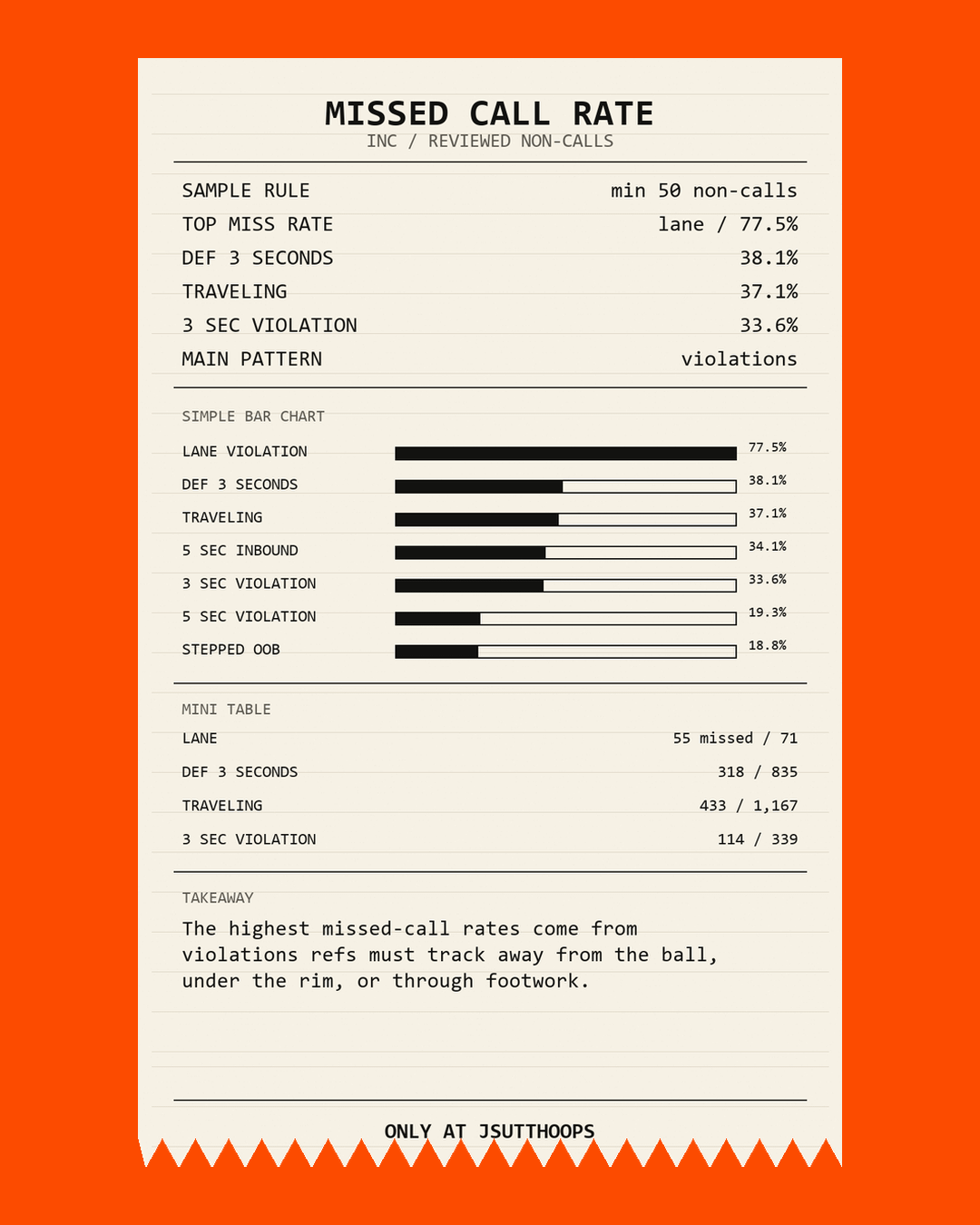
The above chart should scare the heck out of you for the sake of the league. Of instances in which the NBA reviewed a potential lane violation that wasn’t called on the floor, 77.5% of those should have been called. In other words, a referee is going to miss 3 out of 4 lane violations — and only ones that are so blatant that they must be reviewed. There’s a bit of bias there (if it’s being reviewed, there’s certainly a chance it’s wrong), but it’s worth mentioning.
Next, you have defensive three-second violations, which, of those reviewed, are missed 38% of the time, with traveling (37.1%) close behind.
In most contexts, being wrong over 33% of the time is abysmal. In the NBA, it is equally so, but we don’t necessarily realize when we’re watching the game.
Next, let’s talk about which teams are benefitting the most from calls missed (or called incorrectly) via the L2M reports. The Lakers, unfortunately for those who are conspiracy-leaning, are not at the top in terms of net gain:
